
Machine detected: Vertical Drill (Model XZ-120)
Feed rate: Optimal
Load: 67%
Practical AI assistance for industry
Bring expert knowledge to the shopfloor with vision, voice, and process context. Start with a head-mounted camera and wrist-mounted smartphone, and add Mimetik AI Gloves to capture hand actions.
What We Build
Industrial work is highly contextual, and technicians need the right documentation, specifications, and troubleshooting knowledge while working on equipment.
Mimetik builds AI systems that combine sensing, enterprise knowledge, and worker-facing devices, so AI can understand the task precisely and support people with short and crispy answers in real time.
Industrial AI systems must first understand what is happening during real work tasks.
The Observe layer captures operational signals that describe the technician’s environment, task, and equipment interaction.
Typical sensing sources include:
By combining these signals, AI systems can understand the current task, equipment context, and relevant documentation with much higher precision.
Interpretation is where AI creates most of the value: it turns captured signals into actionable understanding and prepares effective assistance.
AI agents combine multiple capabilities, including:
The key challenge is the tradeoff between how much context must be observed, how much the model must learn to interpret it, and how much intelligence is needed to make Assist truly useful. These tradeoffs evolve over time.
Worker interfaces and connected devices give technicians instructions, technical knowledge, and a simple way to feed AI live task context without interrupting workflow.
Common interfaces include:
This enables AI support to be part of the physical workflow through devices that workers use naturally while AI continuously receives the context it needs. We advise on the best-fitting devices.
Lightweight setup · vision and voice
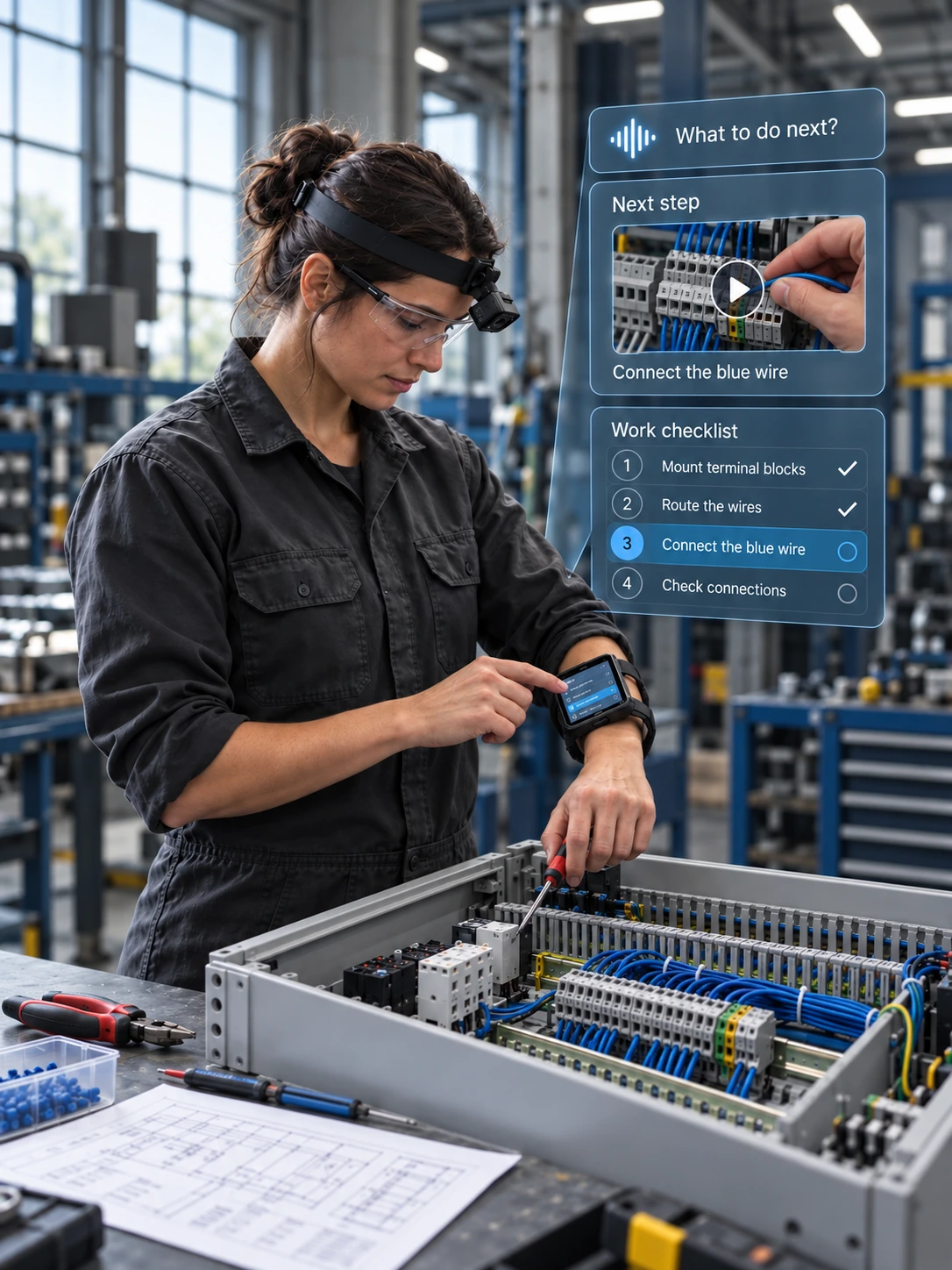
Start with a lightweight, powerful AI assistance setup: just a head-mounted camera and a wrist-mounted smartphone. The camera sees the work, voice lets workers ask questions, and the phone brings expert guidance to their wrist. No gloves, body trackers, or additional motion-capture sensors are needed.
Our Know-How
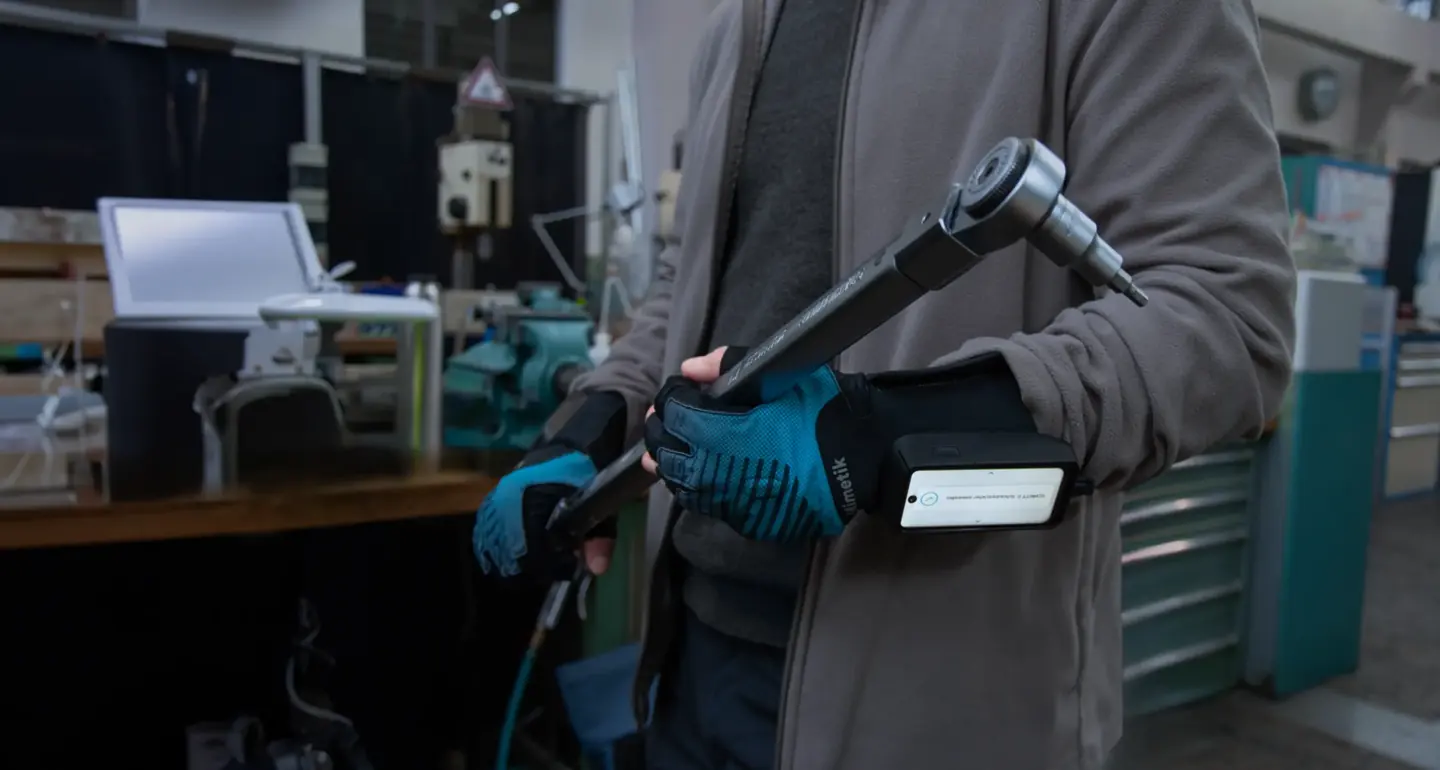
Mimetik AI Glove is an AI interaction device designed to capture both structured and unstructured manual actions during industrial work.
By analyzing hand and finger movements—including subtle micromotions—the glove’s AI can recognize patterns ranging from short, gesture-like sequences (similar to a language of the deaf) to complex patterns corresponding to full assembly work steps.
How Industrial AI Works
AI systems can support operational work in several ways by combining AI reasoning with context-providing devices.
 Real-Time Knowledge Retrieval
AI systems can retrieve relevant instructions, specifications, and procedures during maintenance or assembly tasks.
 AI-Supported Troubleshooting
AI systems can assist diagnostics by analyzing manuals, maintenance records, and technical documentation.
 Automated Work Documentation
AI systems can capture observations, work progress, and structured maintenance records during execution.
 Technician Training
AI systems can provide contextual guidance while technicians perform real work tasks and interact through wearables or other industrial devices.
Example Scenario
A technician arrives at a machine to perform a scheduled maintenance task.
During the task, the technician needs to confirm a torque specification for a specific revision.
Instead of searching through manuals or contacting a supervisor, the technician asks the AI system directly.
The AI retrieves the correct specification from technical documentation and filters it for the exact machine configuration and document revision.
The technician continues the task without interrupting the workflow.
Final CTA
If you are exploring how AI could improve production or maintenance in your company, let’s discuss it.
Book a Call