01
Stereo vision
Two synchronized cameras track visual features and provide motion and scale constraints.
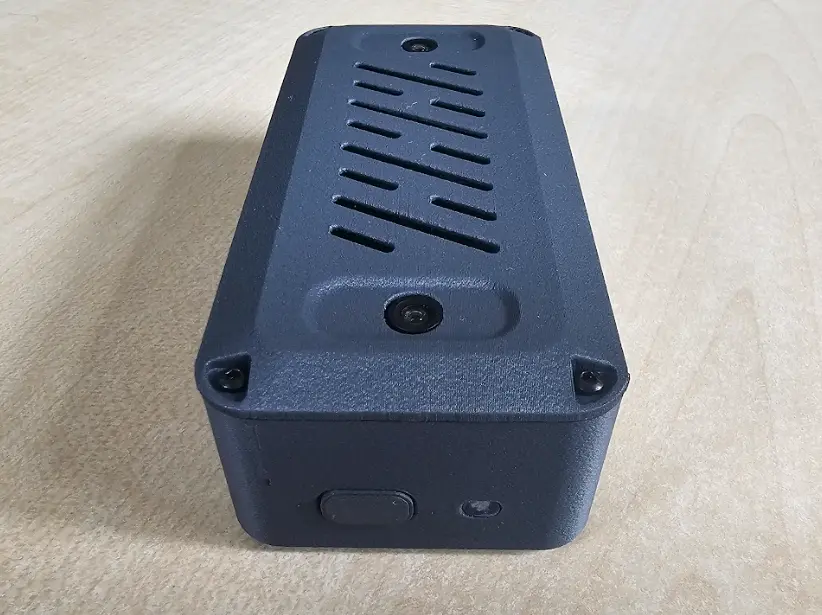
Infrastructure-independent spatial tracking
The M-One 6-DoF Tracker estimates position and orientation directly on the device by combining stereo vision with high-rate inertial measurements.
Calculated on-device
A live visual-inertial odometry pipeline fuses synchronized camera and IMU measurements into a continuous pose stream.
Two synchronized cameras track visual features and provide motion and scale constraints.
An onboard ICM45686 IMU supplies gyroscope and acceleration data at approximately 200 Hz in the tested prototype.
The estimator outputs timestamped 3D position and quaternion orientation at approximately 30 Hz in the tested configuration.
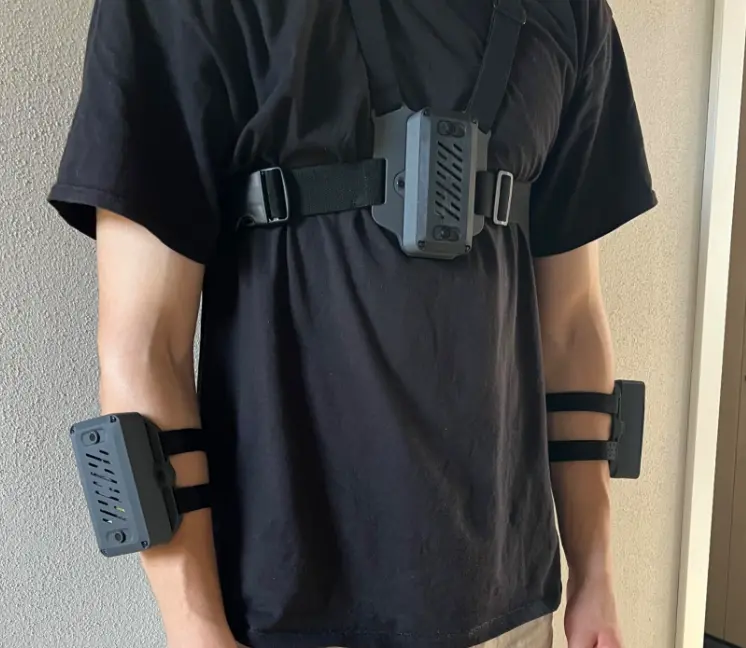
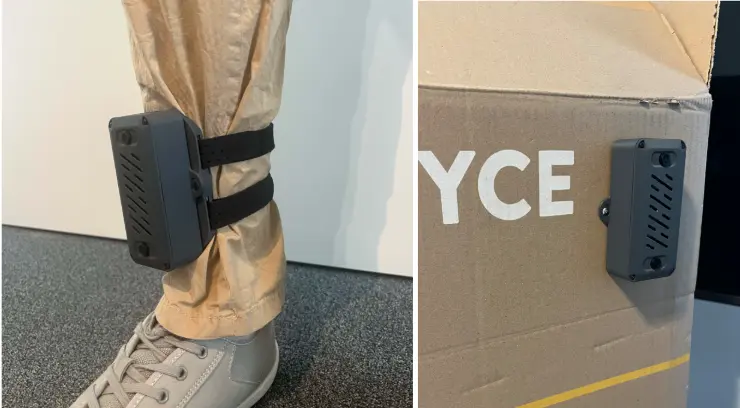
Adaptable mounting
Wear the tracker on the chest, hand, or leg, or attach it to tools, boxes, and other equipment. Strap-based adapters and mechanical mounting points support fast setup across different forms and materials.
XR interoperability
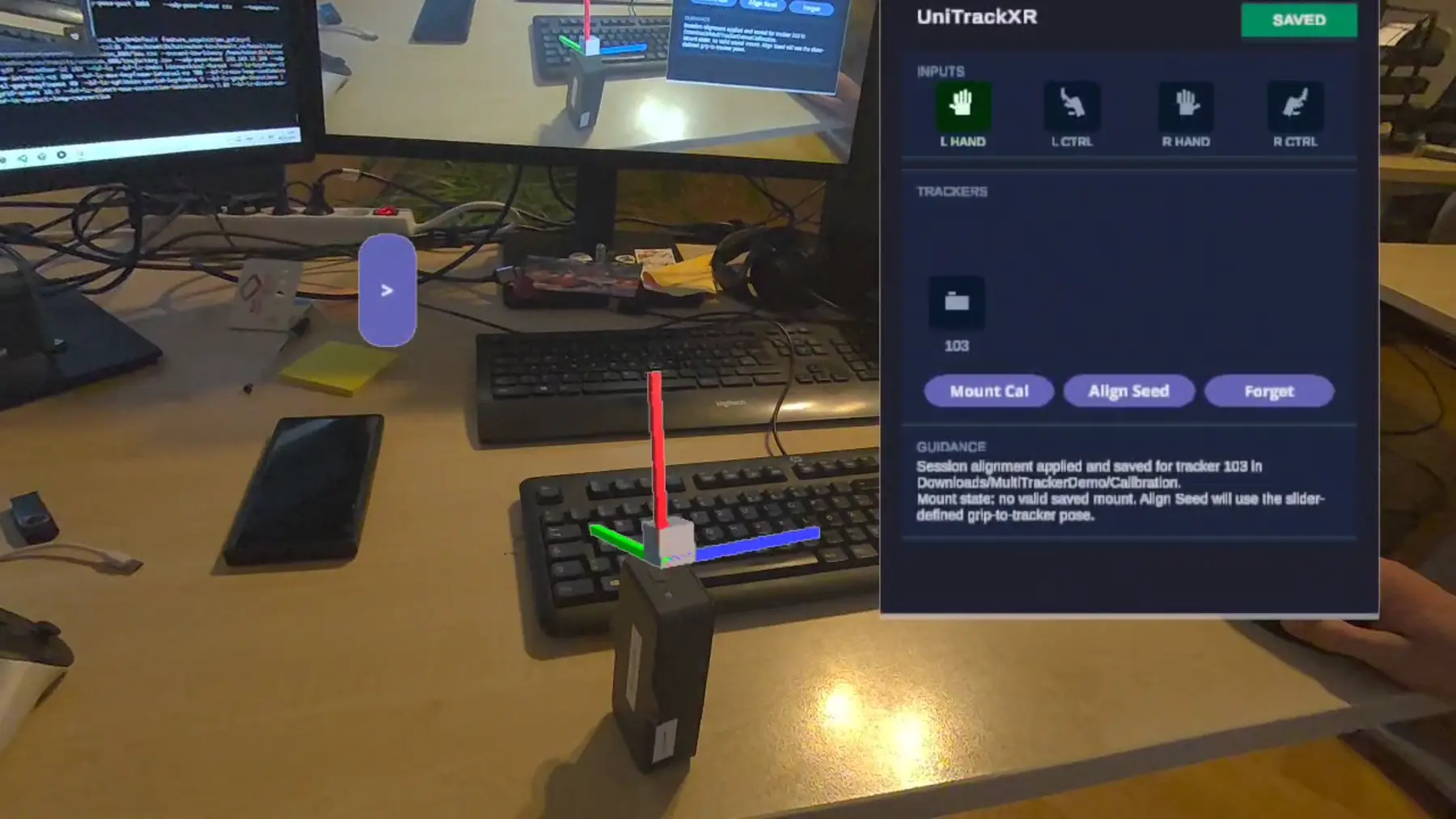
The reference Unity integration uses OpenXR for session lifecycle, spaces, poses, and input. The prototype was demonstrated with HTC Vive Focus Vision and Meta Quest 3.
Prototype evidence
The documented M4 evaluation covered robot-mounted, human-held, human-worn, multi-headset, lighting, occlusion, and feature-density scenarios.
These are prototype evaluation results, not universal product specifications. The report also identifies limits during fast motion and in visually feature-poor environments.
Rotational accuracy
See the recorded comparison of tracker and robot rotation values for roll, pitch, and yaw.
Watch demonstration →Object tracking
See a human-held tracker use loop closure while moving around an office environment.
Watch demonstration →Add spatial context
Tell us what must be tracked, where it moves, and which XR or data workflow will consume the pose stream.